
March 26, 2012
Changing of the guard
It felt like Senegal had won the World Cup yesterday. Dakar was positively jubilant. People were smiling, singing in the street, arriving late to work… After nearly a year of ongoing protests that saw thousands pour into the streets to voice their anger against incumbent leader Abdoulaye Wade’s third run for presidency, the second round of elections yesterday went off without a hitch. But perhaps the biggest surprise of all, was the speed with which Wade conceded defeat. Only three and a half hours after voting stations closed, Wade – following in line with his predecessor Abdou Diouf back in 2000 – called his opponent and unofficial victor, Macky Sall, to congratulate him. It was an ironic twist on a continent where too many aging leaders locked into power become impediments to their own country’s development.
I live in a huge Wade-supporting neighborhood, not far from Wade’s Dakar home, the very one he’s about to move back into once his palace bags are packed. The weekend before the election I could see young boys outside my window sticking up rows of Wade posters. But before the day’s end, the corners were already starting to fray, and finally most of them had been stripped down… a forecast of things to come for other longstanding heads of state in Africa? I’m hopeful.

_________________________________________________________
March 13, 2012
Though most of the stories I cover in Senegal relate to humanitarian and development issues, one of the reasons I chose to live in such a vibrant and chaotic city as Dakar is because I am constantly confronted with dichotomies. The common Western assumption about “Africa”, as a singular exotic cultural entity suffering from the ongoing effects of poverty, disease, war and corruption, is a skewed vision of the continent. And while these aspects certainly do exist, living here I also have the opportunity to bare witness, through either teaching, reporting or just going out in this city, that there is a whole other world of development going on that seems largely absent in mindset of westerners and in the mainstream media. One of my favorite ways of getting this perspective is through arts and culture. Sometimes I think this can reveal as much, or maybe even more, about the social development of a country than any trip to a rural health clinic.
Last night one of Senegal’s biggest urban furniture designers, Ousmane Mbaye, held an opening exhibit of his industrial urban designs alongside a French architectural designer, David Guyot, who specializes in carving sleek, clean-cut teak furniture. The exhibit was called “shared friendships” and it contrasts the very different styles of these two Dakar-based designers. Mbaye’s work includes mostly colorful refurbished metal pieces – lamps, bookshelves, chairs – that are all very modern, if not slightly cold and robust. Guyot’s pieces – bed frames, coffee tables and chairs – are much softer, more natural and traditional, a reflection I later learned of his own upbringing in the countryside of France. I didn’t speak with either artist, as there was a film crew hovering over them, but I wondered if their distinct styles was simply a reflection of their different personalities and aesthetics, or if underneath there was some longing to pursue that Other, whether it be the vibrancy of the modern world or the simplicity and beauty of a more natural, traditional world?
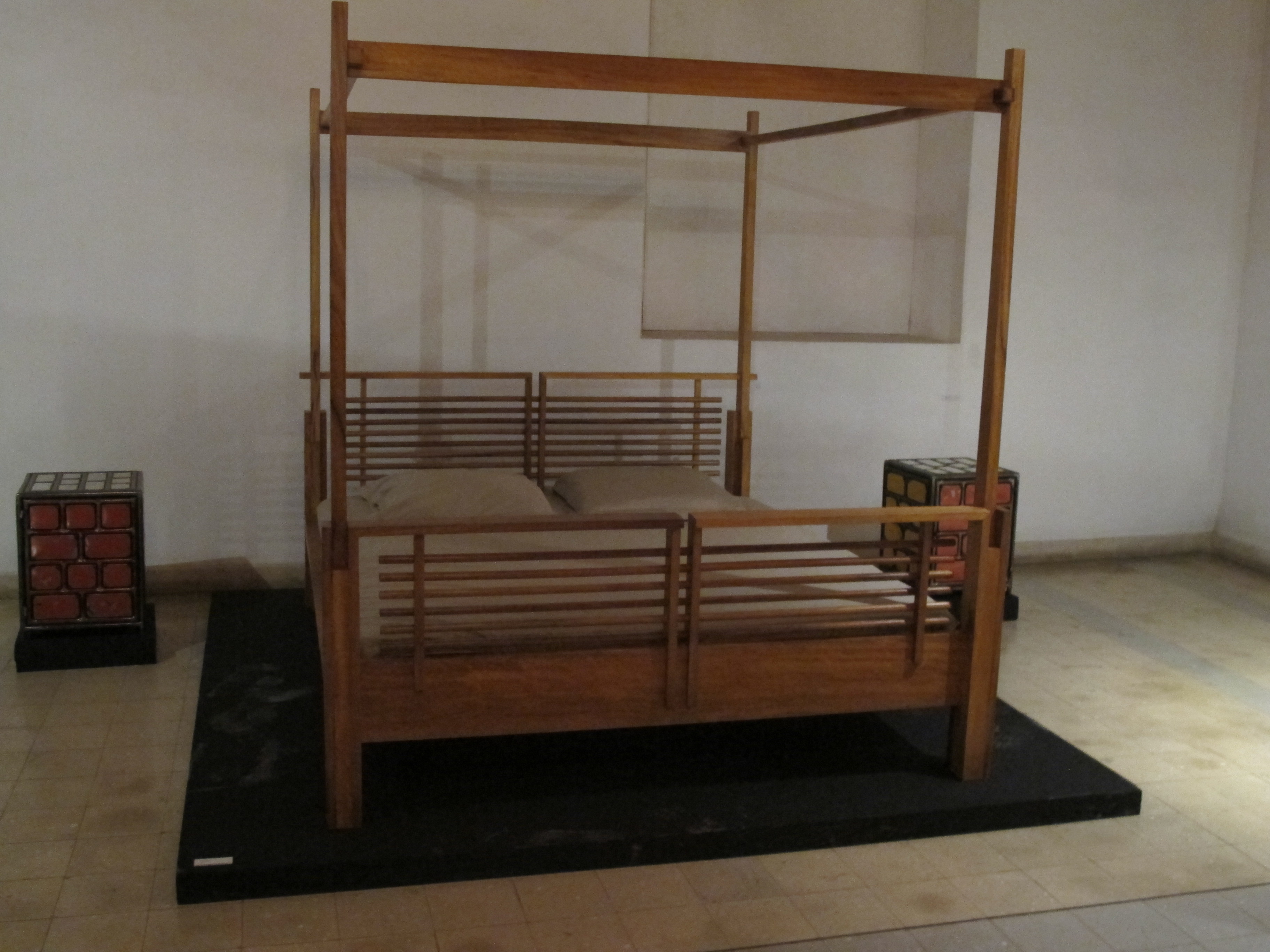
Whatever their answer might be, they are both obviously driven by the same passion of bringing beauty and comfort into the home. And in Senegal, this is in itself telling, as the idea of home as an enclosed, private space is a relatively new concept, and also an inevitable part of development. Ousmane Mbaye has become a big name outside Senegal in recent years, exhibiting in Europe and North America. It may be awhile before more places in Dakar, beyond the expat villas and five star hotels, can afford to buy his pieces. But the very existence and space that allows such an artist to live, work and thrive in Dakar (and he is only one of many) is proof that there is momentum and movement in the cultural sphere that may be a side of development worth keeping an eye on.
_________________________________________________________
January 31, 2012
Protests…
The M23 “movement du 23 juin” (a social protest movement started after the June 23rd riots last year), along with Y’en a marre members, organized another mass anti-Wade protest this evening. Myself and another friend journalist went down before it got dark to see how things were shaping up.
It was early evening when we got there and already there were hoards of media and people gathered in and around the main “obelisque” square, people of all ages and backgrounds, waving flags, holding signs with slogans like “Young people, there’s a price to pay for Wade’s departure” and “Wade, get lost” scrawled across. In true Senegalese fashion there was a lot of singing and rhythmic music blasting from the loud speakers. Peanut and juice sellers were making their rounds through the masses. For a brief moment I almost felt like I was at a Sunday afternoon sporting event, rather than a heated political protest. Honestly, it’s hard to imagine the Senegalese getting wholeheartedly involved in something to the point that they actually come out to protest. It’s simply not in their culture. They are pacifist by nature, and many quite fatalist to an extreme. But all that will have to change if this country is going to move forward. And soon before the moment passes.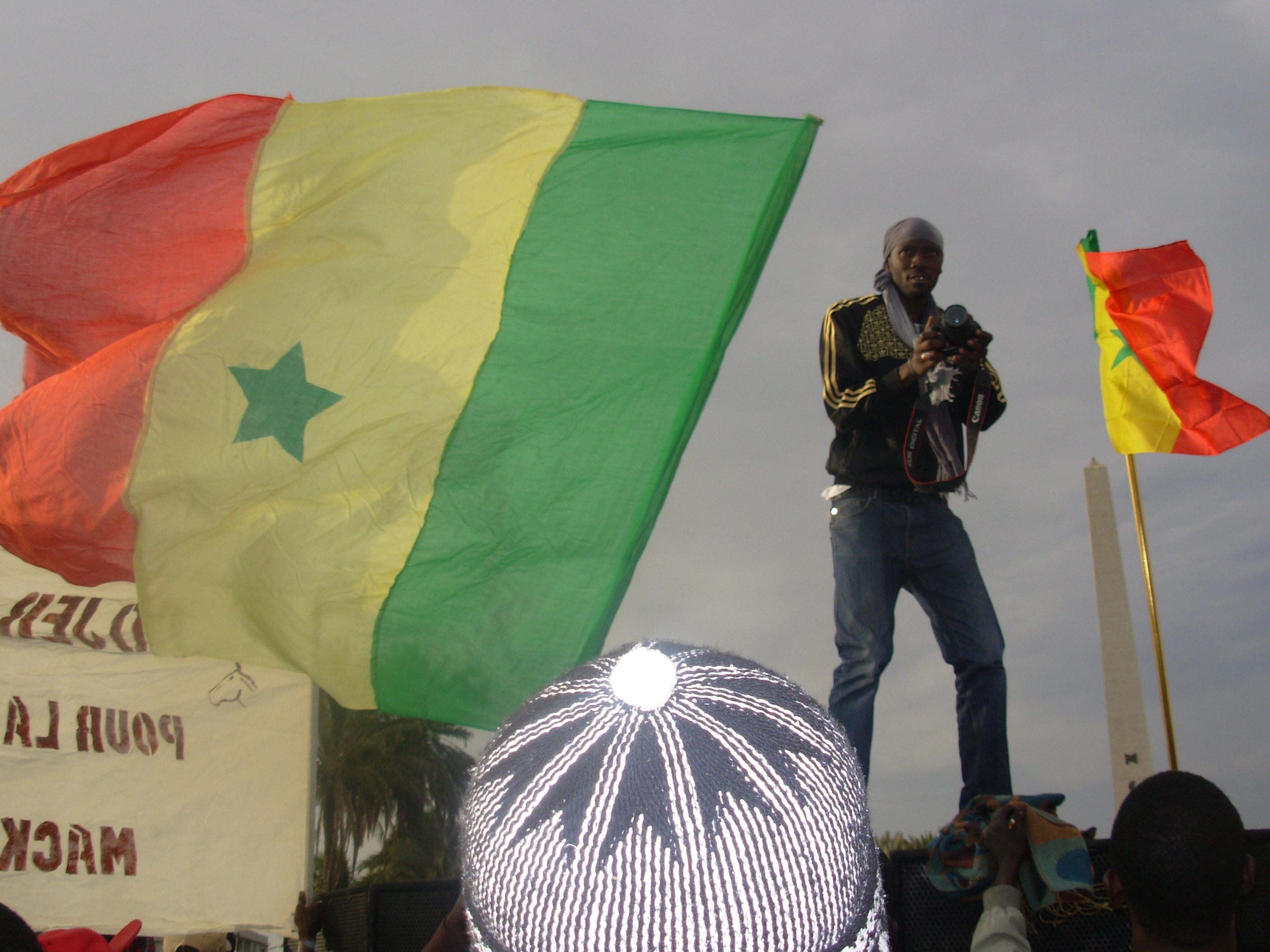
It seemed promising to witness such a variety of people there – many middle-aged Senegalese men and women, young teenage boys and girls, and everything in between. But were there really enough people there to make a strong enough statement? Reports say there were a few thousand protesters. It’s hard to know. How many were really there for the rally and not merely walking by to take a quick peak on their way home?
The real test will be in the coming days and weeks. Will the Senegalese people finally be able to group together to fight against a man so many vocally despise? Are they really that committed to this case? Most of my own students aren’t out there protesting because they say it’s not safe. While that’s true – a couple people were recently killed in the north of the country when police opened fire on protesters, and a police officer was killed here in Dakar after Friday’s riots – what message does this send? Granted most of these men and women come from particular backgrounds: middle-class upbringings, well-educated and in relatively well-paid jobs, but they are seemingly as frustrated and desperate for change as the average unemployed youth on the streets. So what will it take to get them on board too? Like the makeshift cardboard sign said, there is a cost to oust this leader.
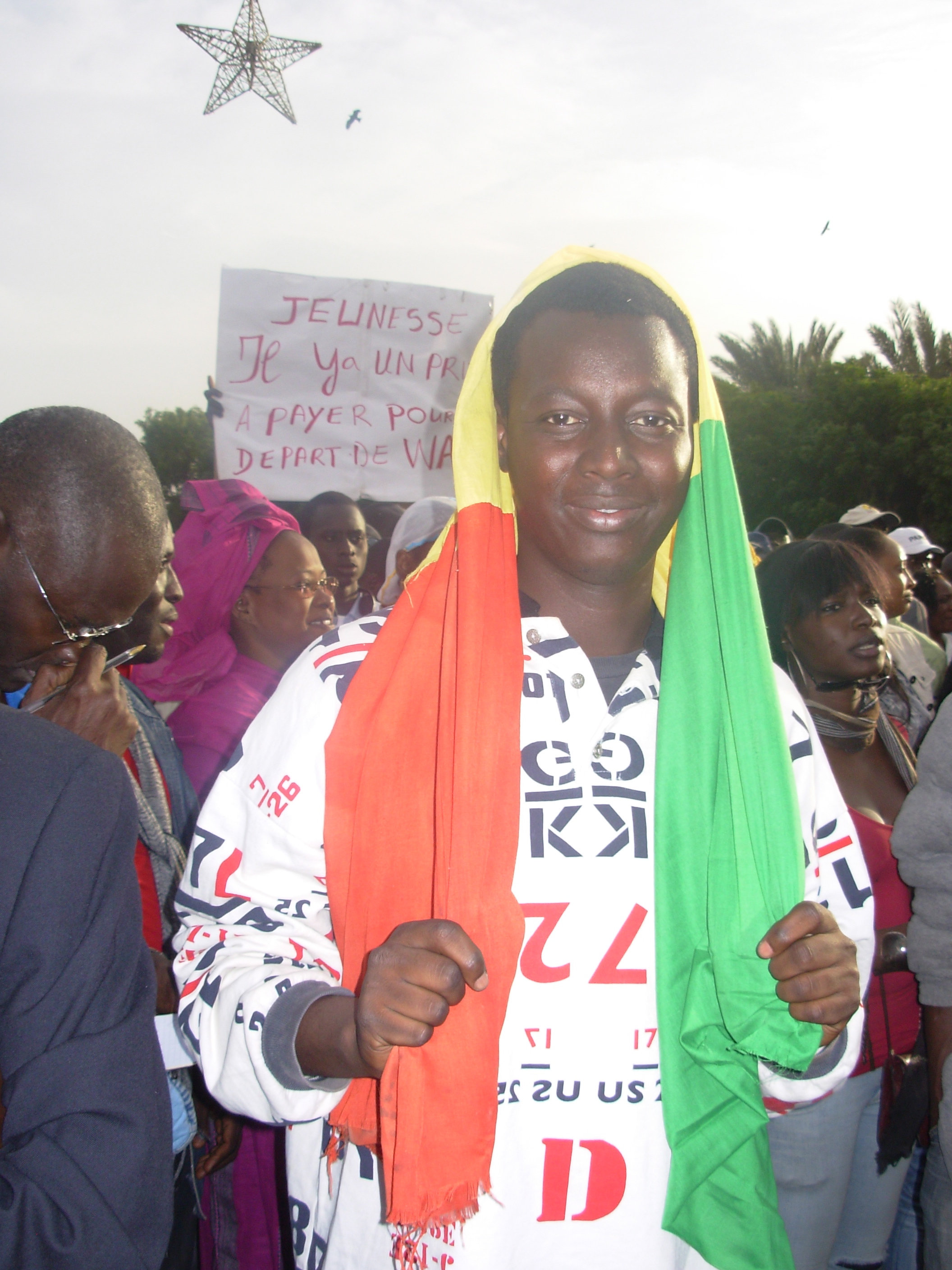
Most people outside Africa who are interested in this situation want to know if this has the makings of an African rising. It definitely has many of the ingredients of a ‘Senegalese Spring’, and it is clear that many M23 and yen a marre members are ready and driven to give up their lives for it. One only hopes the work these groups have been doing here in Senegal for the last year is not in vain and that a bigger mass of people will get on board in the coming days. The “New Type of Senegalese” is being called into action. And if it doesn’t happen soon, I fear they will have little more reason to complain.
_________________________________________________________
January 27, 2012
A sad day for Senegal
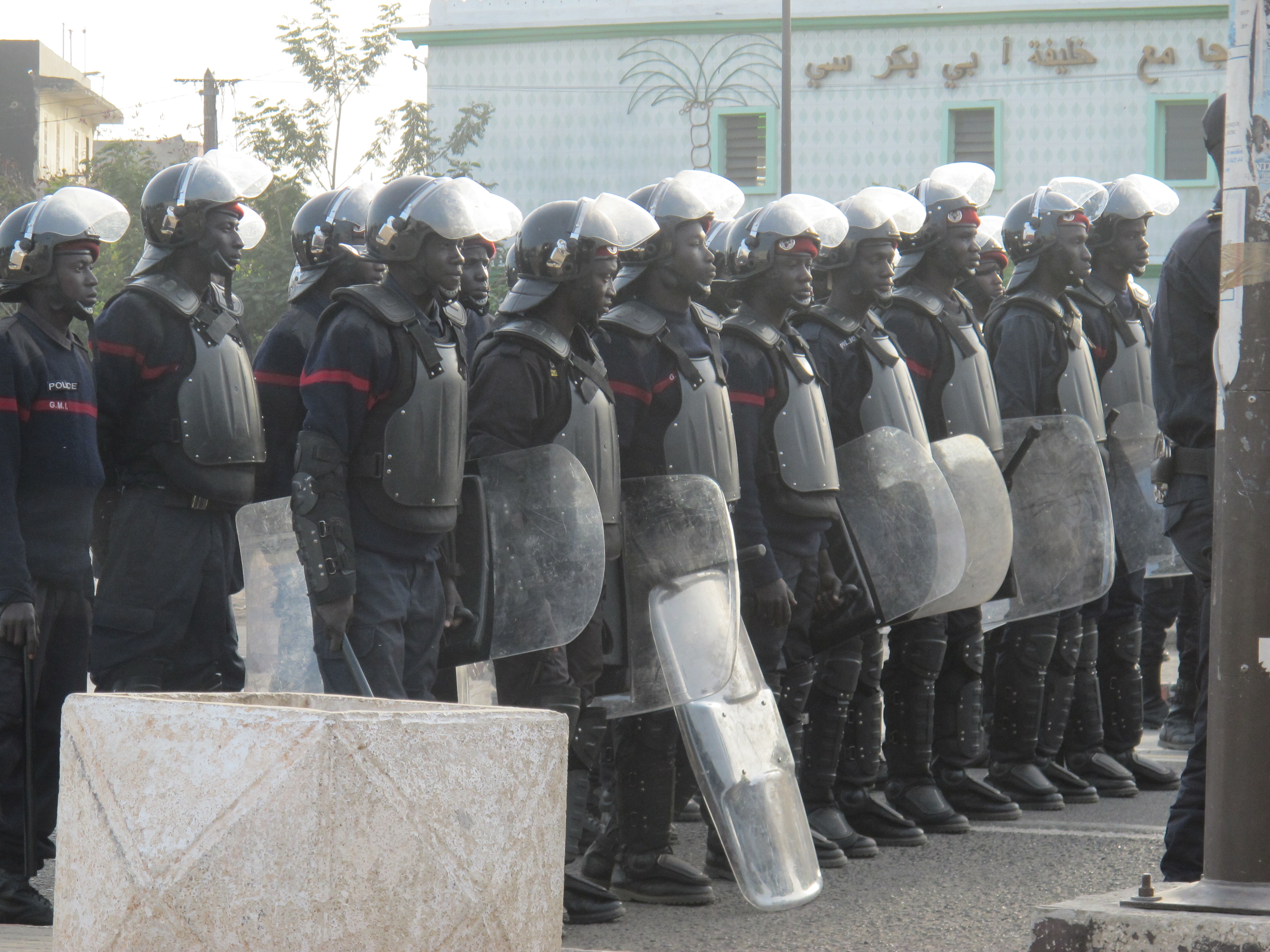
There was an eerie stillness in the air all day here in Dakar – very strange feeling in a normally vibrant and chaotic city. But today the roads were much quieter, fewer employees were at work and less children on the street. Everyone seemed to be holding their breath for the inevitable outcome.
Since early in the morning the military police have been out in full force, stationed throughout the city waiting for the backlash that would result from a court ruling everyone expected.
It’s a sad day for this country. Senegal is often reputed as the bastion of democracy in a region historically plagued with ruthless leaders and bloody wars. But after the country’s highest court deliberated all day behind closed doors, they finally released the list of eligible candidates to run during next month’s elections. The 85-year old current president, Abdoulaye Wade, has been accepted to run for a third mandate – another seven years in office (if) he wins – even though it goes against the constitution. He argues the law doesn’t pertain to him, because it didn’t exist when he was first elected back in 2000. Youssou Ndour, the biggest star of the political show so far, was quite unexpectedly refused admittance into the presidential race. The officials claim he didn’t have the required 10,000 signatures to be a candidate. He’s no doubt going to appeal.
Where to now? Tensions are growing. Thousands are gathered in locations around the capital and across the entire country in retaliation with the military, who will try to hold back a mass of demonstrators filled with anger and frustration. And now from my apartment window it’s only the clear sounds of tear gas guns and the smells of burning tires that fill the air.
_________________________________________________________
Presenting the “New Type of Senegalese”
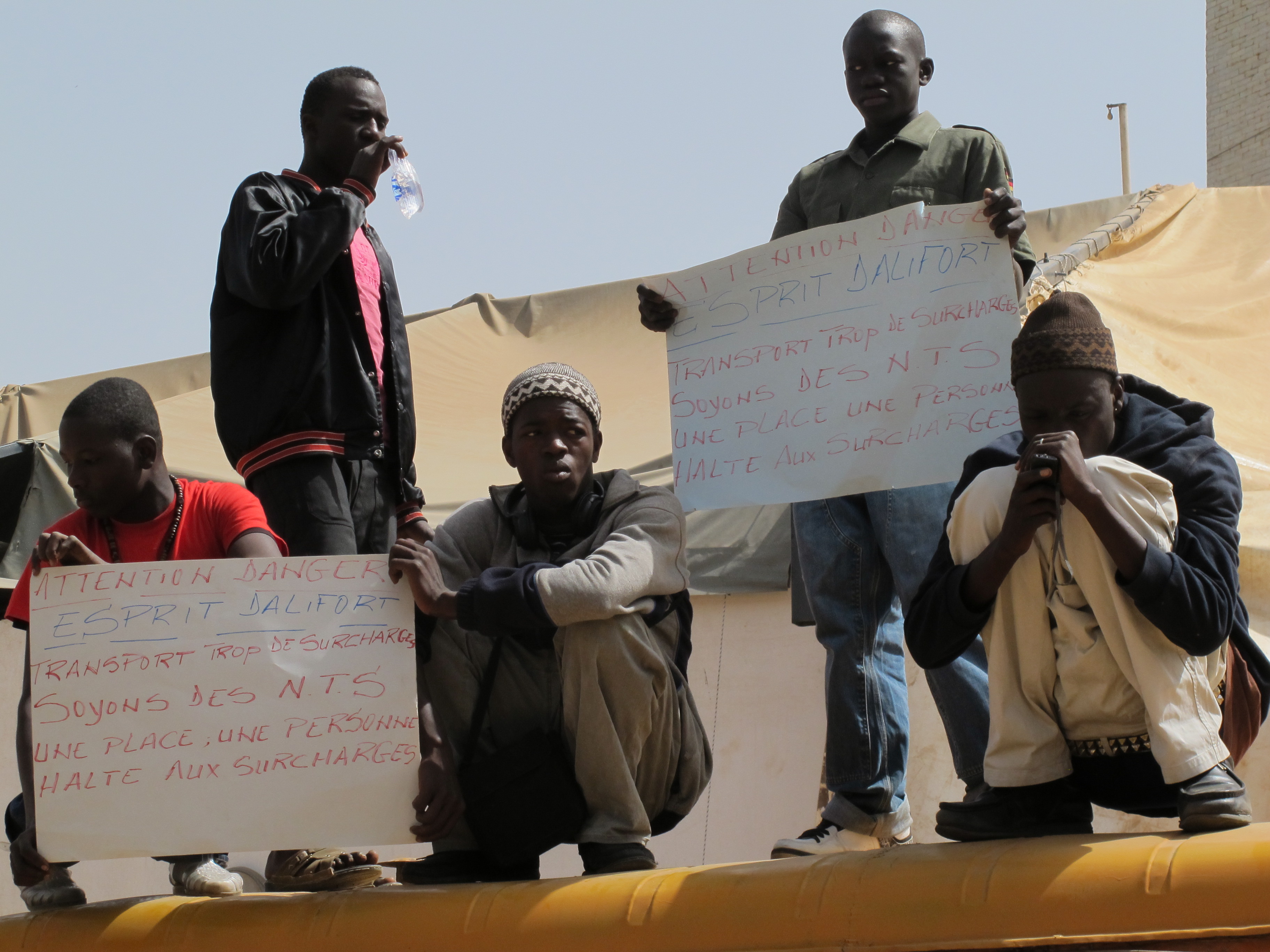
Just a month away from Senegal’s presidential elections, the youth-led protest movement Y’en a marre (“I’ve had enough”) organized a full day “Foire aux problèmes” (fair of problems) highlighting the plethora of social and economic ills plaguing the local population, almost 70% of whom under the age of 25 with roughly half being unemployed. Over the last year, electricity cuts have become endemic – in some neighbourhoods lasting close to 24 hours – food and fuel prices have gone up – the price of maize (a staple crop in Senegal) as much as 74% and crude oil increases were up 36% last spring compared to the spring before. And then there are the teachers’ strikes. Both at the main university here in Dakar and at secondary and high schools throughout the country students spend more time outside the class than in them. A friend of mine’s daughter, who should be in high school by now, hasn’t actually had a full year of school in the last three years. She spends her days at home, washing the laundry and preparing lunch. All of these problems, compounded day in and day out, can make living in Senegal a real drudgery and it seems there might just finally be a collective initiative who are ready to stand up for themselves.
Since the protest group formed last year, which was initially lead by a mix of journalists, musicians and artists, the Y’en a marre movement has spread throughout the country and into the Diaspora garnering support in the tens of thousands, from all backgrounds and ages. They are advocating for a NTS – a “new type of Senegalese” – one who is no longer sitting around drinking tea all day, throwing garbage in the street and arriving late for meetings.
From my own encounters so far with the core group of y’en a marristes they have been true to form. At the “Foire aux problèmes” fair, it was impressive to see the dozen or so different Y’en a marre groups who set up booths inside a main square in Dakar, each one dedicated to a certain cause – from the growing pollution and trash disposal problems, to the endemic traffic jams in Dakar’s outskirts, burgeoning food prices, repeated teacher strikes at the university, and even the ‘plight’ of illegal street sellers. The list of ailments inflicting the young people in Senegal is spiralling, as it is in many other countries across the continent, and it was impressive and commendable to see the peaceful initiative these (mostly young men) were taking to help garner support and draw attention to what they want to change. All the presidential candidates, except the current President, made brief appearances, though the Y’en a marristes aren’t taking sides with any political party so far.
When I asked where all the young, fed up young women were, Aliou Sane, one of the founding members said they have tried to encourage women to join the movement, but they are more hesitant. It’s a question that has come up before, but for anyone who lives here it is an understandable answer. The majority of women here continue to assume more subservient roles in almost every aspect of life, even if on paper there is parity and women do held places high up in government offices, educational institutions and medical facilities. One of my students, a highly successful female doctor and very vocal participant in our classes, told me she cannot leave the house to risk her well being, because she’s a mother of two. Meanwhile she supports her husband when he goes to protest, and recently when he and a friend went to a rally the friend even got his leg broken. “All the more reason I won’t go,” she explained.
For the elections next month most people aren’t expecting serious problems, in terms of violence or major civil unrest in the way of Ivory Coast, Guinea or Nigeria. Most Senegalese consider themselves “too pacifist” and “all talk”, but we’ll probably get a better inclining for what’s to come after the electoral list is released next week. This list will reveal who the Presidential candidates are. So far it looks as if the current President, who’s seeking his third term in office even though it goes against the constitution, will be accepted. He would run against three of his former prime ministers, as well as a local female fashion designer (one of two women in the race) and Africa’s biggest musical talent Youssou Ndour, who only weeks before announced his candidacy.

_________________________________________________________
December 28, 2011
Islam’s top ten tips for keeping your wife happy
One of Senegal’s better known marabouts (spiritual leaders) started his blog today on one of the country’s online newspapers. His opening piece is about how to keep your wife(-ves) happy. I translated from French. So far, the article has over 23,000 hits.
1. Congratulate your wife when she does something correctly.
2. Stop always criticizing and complaining about your wife. Don’t compare her to the other people you love.
3. Listen to your wife with interest, because this will comfort her when she has problems. But there are some women who just won’t stop talking or will talk about your family or your friends. In this case, calmly fix the problem with wisdom and gentle words.
4. Balance your love between your family and your wife. Don’t give too much attention to one over the other.
5. Be to your wife what you want her to be to you, because she loves in you what you love in her. Make yourself look handsome for her so that she too will look beautiful for you.
6. Help your wife with the household duties, because the Prophet Mohammed did for his wives and it is simply good behaviour.
7. Try to overlook your wife’s faults. Hiding (the faults of others) is nine-tenths of life.
8. Be very careful not to look at what is not allowed to be seen, whether on the street or on TV. Isn’t it amazing the types of marital problems that have arisen due to television shows?
9. Don’t remind her of any past bad behaviour and don’t insult her on account of this – especially in front of other people.
10. Make sure your wife has good self-confidence. Don’t turn her into a housemaid who simply follows orders. Encourage her to think for herself and to form her own ideas. Consult with her on all aspects, but do it in a gentle way. If you think her ideas and opinions are correct, then agree with them. If she disagrees with you, and you are sure your way is best, try to calmly convince her to take your side.
From a Western perspective, these pieces of advice may ring of a condescending, patriarchal attitude many of us like to believe we left behind decades ago. In Senegal, like in many parts of Africa (Muslim or not), gender roles and marital relations are deeply ingrained in cultural and religious practices that have historically placed women in the back seat, as much in the workplace and school, as within the home. Though the situation is improving, there is still a long way to go.
In terms of education there is still some 35% of the female population that is illiterate, and when comparing male and female education levels, Senegal has one of the worst records in the world. In terms of marriage, it also wasn’t so long ago that Senegal had one of the highest polygamy rates in West Africa, with more than half of all unions polygamous. Today this rate has decreased to less than 40%, but it is still evident this type of marital juggling act often puts the women in precarious positions, both economically and emotionally. Child marriage is also an issue in Senegal that persists, though it’s not as high as in some other parts of West Africa (namely Chad or Niger). In Senegal, marrying off child brides, defined as any age below 18, still exists in more than half of all marriages in rural areas and 23% in urban areas. And in roughly half of all these marriages, the wives have little or no education. Without education, they grow up dependent on their husbands, again as much financially as intellectually and emotionally. Senegalese women also continue to have high birthrates – an average of five in the rural areas and 3.9 in Dakar. Large families, though it’s still strongly encouraged by most of the population, also further relegate these mothers to the role of housewife and caregiver.
While there are certainly other important factors to consider before judging the marabout’s article, the post does reflect some tiny steps forward in a country where the global gender gap (which measures gender equality across economic, political, educational, and health) is still among the worst in the world. The 2011 Report ranked Senegal 92nd out of 135 countries, which is an improvement from its 102nd position two years ago. The blog does at least reflect an effort, and by a highly esteemed Islamic leader, towards treating women in Senegal with perhaps more respect and decency than some have ever had, or even believe they deserve. And judging by most of the readers’ comments, the post was well appreciated. Interestingly, there was even one disgruntled male reader who asked for some tips to give his wife on how to treat her husband better…
_________________________________________________________
November 30, 2011
Opening up, behind bars
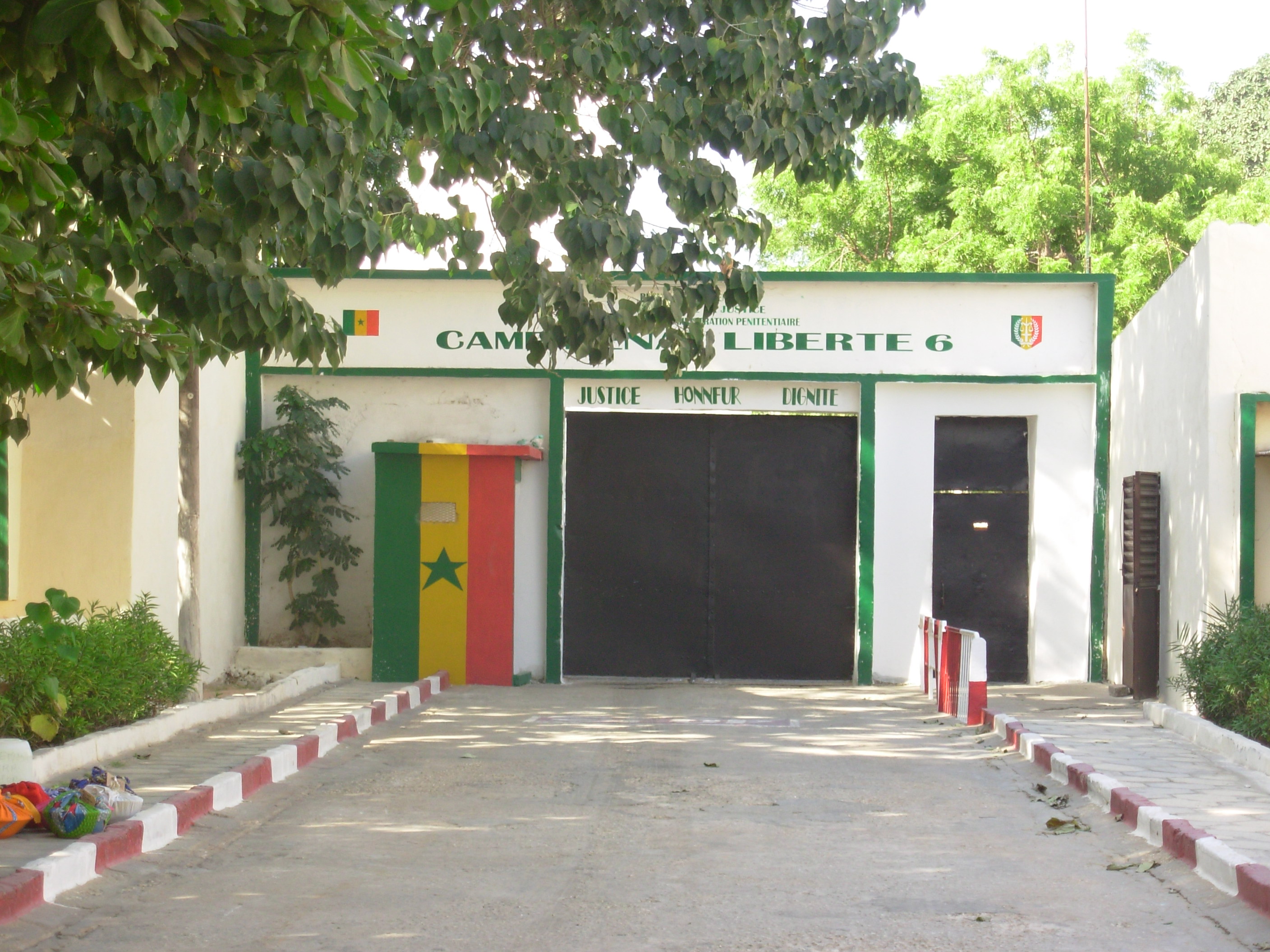
I’ve been spending quality time at one of Dakar’s maximum security prisons lately. I first went to speak with the head of the medical unit for a story on the health conditions over at the child’s prison, but now I’ve found myself spending hours drinking tea with the guards, eating lunch with the staff and giving impromptu English lessons to some of the prisoners.
For the second day in a row I headed back to the iron gates this morning. I was prepared for a long (and potentially monotonous) day of AIDS awareness training given by a local NGO. Even though Senegal has a very low rate of HIV, prisoners are considered among the most vulnerable group in the country. I was invited to the talks, but only to listen. No notes, no recordings, no photos. Fair enough, I thought. AIDS can be a sensitive topic, and particularly in a male prison in a Muslim country that criminalizes “indecent sexual acts”. What I didn’t know was that the very people giving the talks were themselves homosexuals, and they were also the ones who had been arrested and jailed at that very prison for allegedly engaging in ‘gay acts’ three years ago. Quite the progressive move, I thought, for the Senegal’s penitentiary administration to invite them back.
One hundred and fifty prisoners were shuffled into the open-air room where they sat on wooden benches under two tired ceiling fans. The men were of all ages, from 18 years upwards, and from all parts of the world. Many were wide-eyed and serious, stroking their beards or rolling their prayer beads. Others looked less distressed or perhaps just a bit dazed. Over the course of the next four hours, the prisoners were taught the basics in AIDS transmission and protection, and then invited to ask questions, which ranged from whether AIDS could be caught through tea-drinking or traditional wrestling, to whether garlic and lemon could adequately cure the disease.
But the most striking part wasn’t the talks themselves. It was how eager, grateful and open the prisoners were about the topic. Some asked about getting tested that day, others came to shake our hands and thank us profusely. What surprised me the most, though, was the prisoners’ reception to the speakers – their former prison mates who had once been ostracized for their sexual orientation and who were now being saluted for their help.
_________________________________________________________
November 14, 2011
An ‘other’ side of Senegal
Even though I have never, ever had a desire to go quadding – let alone through the backroads of Senegal careening past grass huts and villagers, kicking up puffs of sand and sending wild monkeys running for their lives- I managed to be convinced a couple weeks ago. Somewhat miraculously, I enjoyed it. We drove in thick mud pits and past lush mangroves, down shady lanes and through enormous baobab forests and yes, past small villages with smiling, if not slightly bemused villagers watching the wacky toubabs (“white people”) roll by.
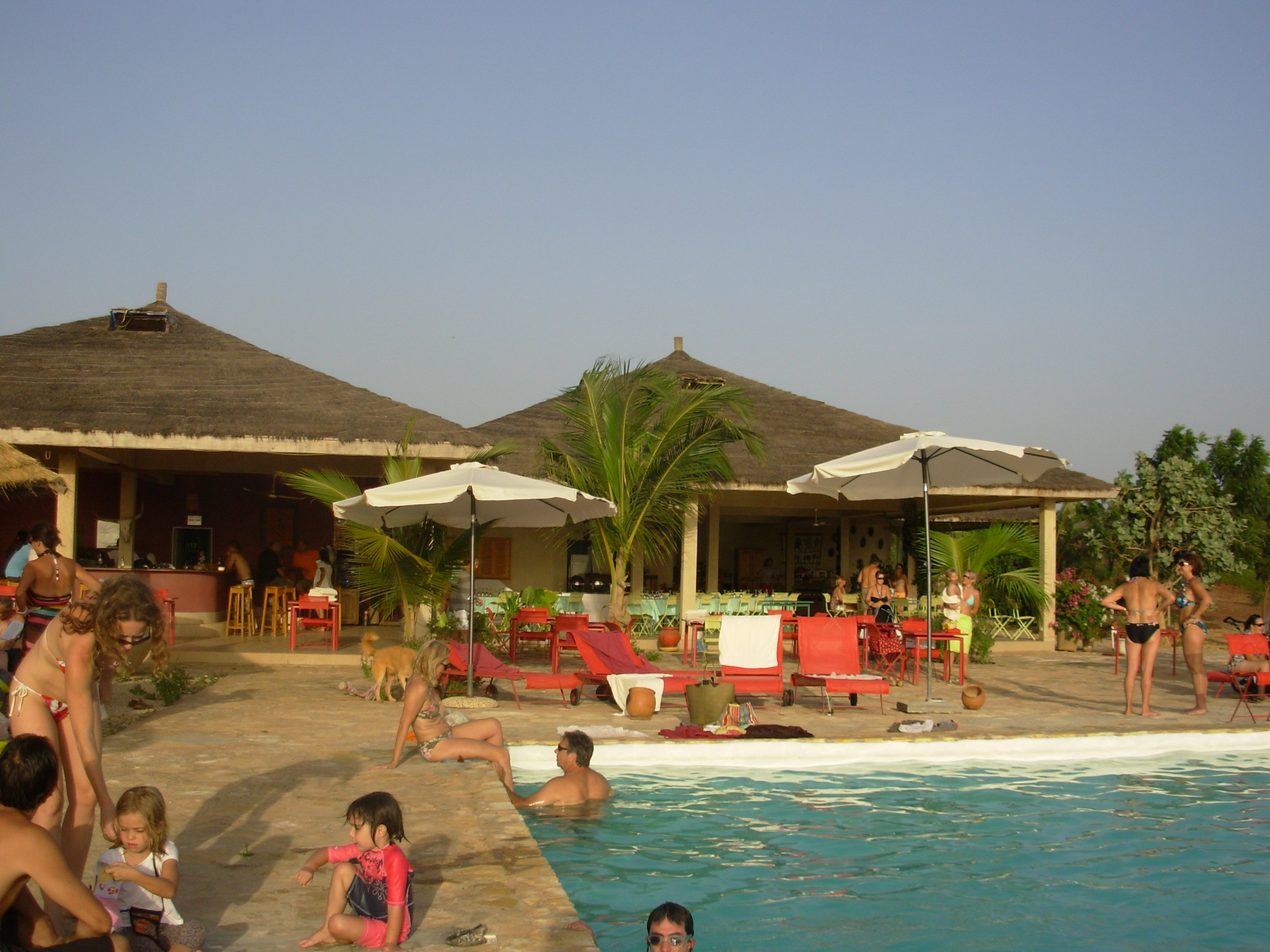
Half way through our three and a half hour venture we stopped for a drink. As far as the eye could see there were only trees, open sandy fields and marshes. The sun was just starting to make its way down towards the horizon when we pulled into a parking lot filled with SUV’s, Peugeots, and Volkswagens. Covered in dirt, dust and specks of dried mud, we removed our helmets, brushed off our clothes and walked through the thatched roofed bar only to discover the most surreal image of the entire day. Here, tucked away in the middle of nowhere, literally off the beaten path, was a hidden respite for dozens of European vacationers. They were lounging on tanning beds, frolicking in the pristine waters of an infinity pool, sipping cool fruit drinks under umbrellas and guzzling local beers at the bar. A long table was set in the restaurant with polished silverware and sparkling white plates. Waiters were busy wiping down chairs as a manager barked orders to his employees off in the corner.
Is this the ‘real Senegal of today’? I wondered. It’s certainly not the same lived reality for the majority of Senegalese who live off a couple dollars a day. But this clash of opposites in Senegal is becoming more and more common. In Dakar it can be seen more clearly. The rise of a middle class has noticeably skyrocketed in the last few years. More locals can be spotted at the neon bowling alley where a single game costs $10 a head. More sushi restaurants and five star hotels are popping up and nightclubs and concerts are starting to charge $20 covers – completely unheard-of only five years ago. Some days I am grateful for these whisks into the Western world. Or at least having the choice… Infinity pools, bowling and sushi are not the reasons I moved to Africa. But I guess the option of having these ‘luxuries’ is the difference between walking into this other side of Senegal and merely having it flashed in your face.
_________________________________________________________
October 25, 2011
Seas of color
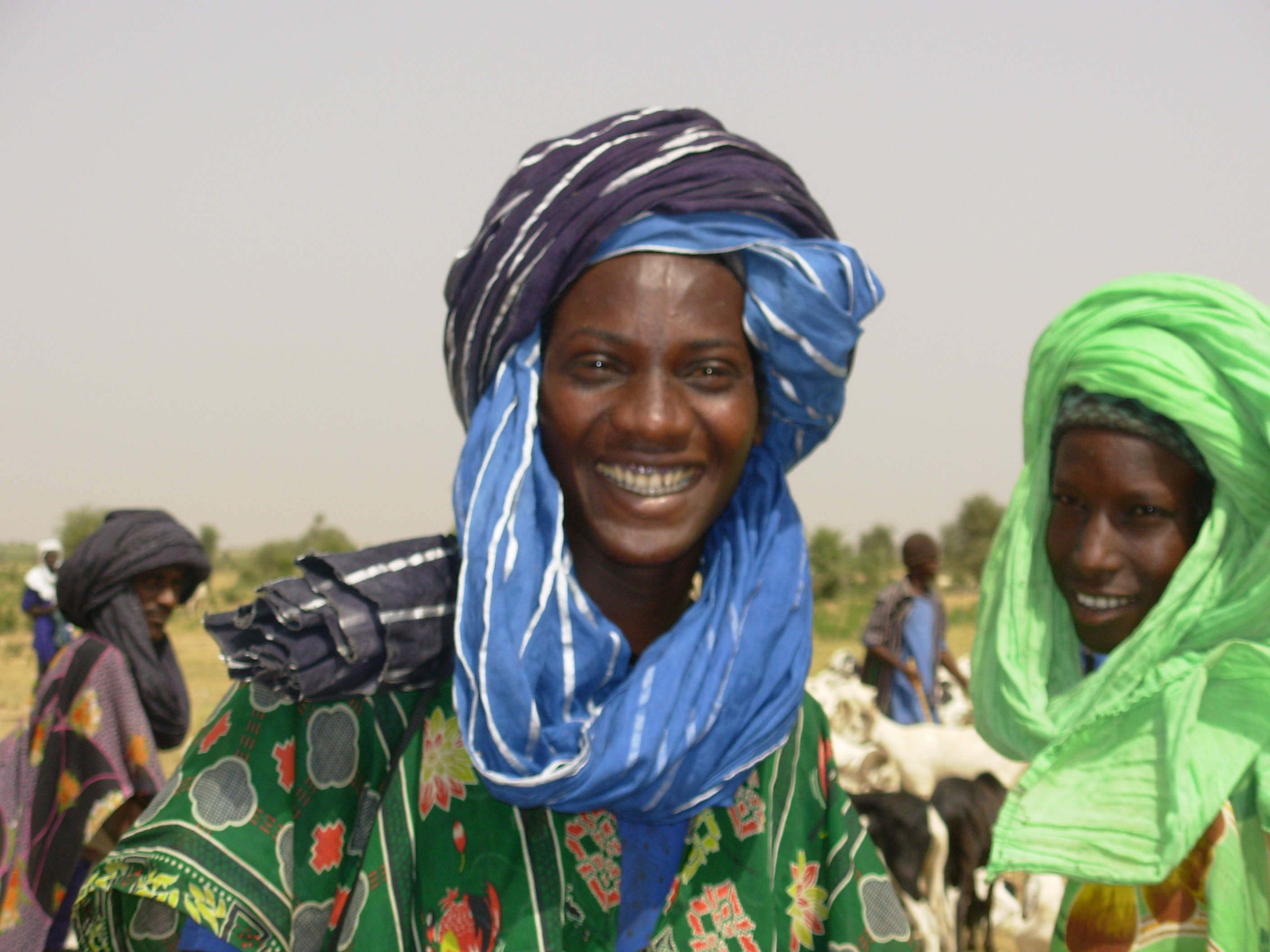
Driving back from a Mauritanian refugee camp in the north of Senegal last week we went past a wide open field by the side of the road filled with a sea of men swaddled in colorful headscarves and long, bellowing robes. We had actually driven by it twice before I asked if we could stop. It was such a welcome sight, especially after days of traveling endless miles where nothing but the quick glimpse of a fleeting bird added specs of color to the limitless reaches of the yellow-colored plains. We got out of the truck, and I plowed ahead forgetting I was the only female heading into a hoard of Mauritanians, Malians and Tuaregs. Sheep herding is a predominantly male activity, and I’ve never actually seen a woman or even a girl either herding or selling a sheep, though the exception might exist. In any case, I’m sure the majority of these men were from the Foula ethnic group, a traditionally nomadic tribe that move throughout West Africa and often hold very strict gender roles, especially among the older generation.
Among all these sheep herders, these two young boys quickly caught my attention. They had bright sparkly eyes, wide open smiles and were wearing this stunning green and blue fabric. They were only about 16 years old, but they were there among all the others under that prickly midday heat trying to sell off their wares before the Muslim holiday Eid-al-Adha in a couple weeks time. We couldn’t communicate, but I was holding my camera and they pointed for a picture. After I showed them how they looked, the two boys broke out into fits of giggles and a small photo shoot ensued.
_________________________________________________________
October 13, 2011
Dakar mornings
The Dakar days and nights are hot now. It’s the sticky season: the woolen-blanket, blow-drier-heat-that-sucks-your-energy-and-leaves-you-depleted-and-listless season. A time when sleep becomes a most precious escape.
Living in a ‘quartier populaire‘ (popular neighborhood) in Dakar doesn’t mean you live in the posh area of town where everyone aspires to be. Quite the opposite. It means you live among the locals. You live in a very lively ‘hood. So lively, in fact, that chances are at any given moment of the day you will never quite forget you’re living in Africa. And early mornings are the most blatant reminders. The 5am call to prayer is surely the first signal, followed by the duet between crowing rooster and bleating sheep. Then there’s the blind lady wrapped in colorful layers of long, wispy fabric who goes door-to-door with her young guide, dangling a large plastic bucket off her wrist and singing verses from the Koran. And lastly, there’s the ear-piercing horn from the garbage truck. All this and you’re up. It’s well before 8am.
Since moving into my building a couple years ago, and into a neighborhood translated from French as “Friendship 1”, I’ve grown miraculously accustomed to this early morning soundtrack. It now rarely manages to wake me from my slumber, or if it does it has become so familiar I quickly drift back to sleep. But there are certain occasions when an unknown noise will emerge – a noise that doesn’t quite meld into the backdrop of my dream – a mysterious tap tap tap from a few houses down; a small cry from a newborn kitten learning to crawl in the sandy field; a higher pitched chant from a new imam or a young boy curiously smashing small boulders against metal canisters . A new sound – however slight or far-off – and I’m jolted awake. This morning was one of those occasions.
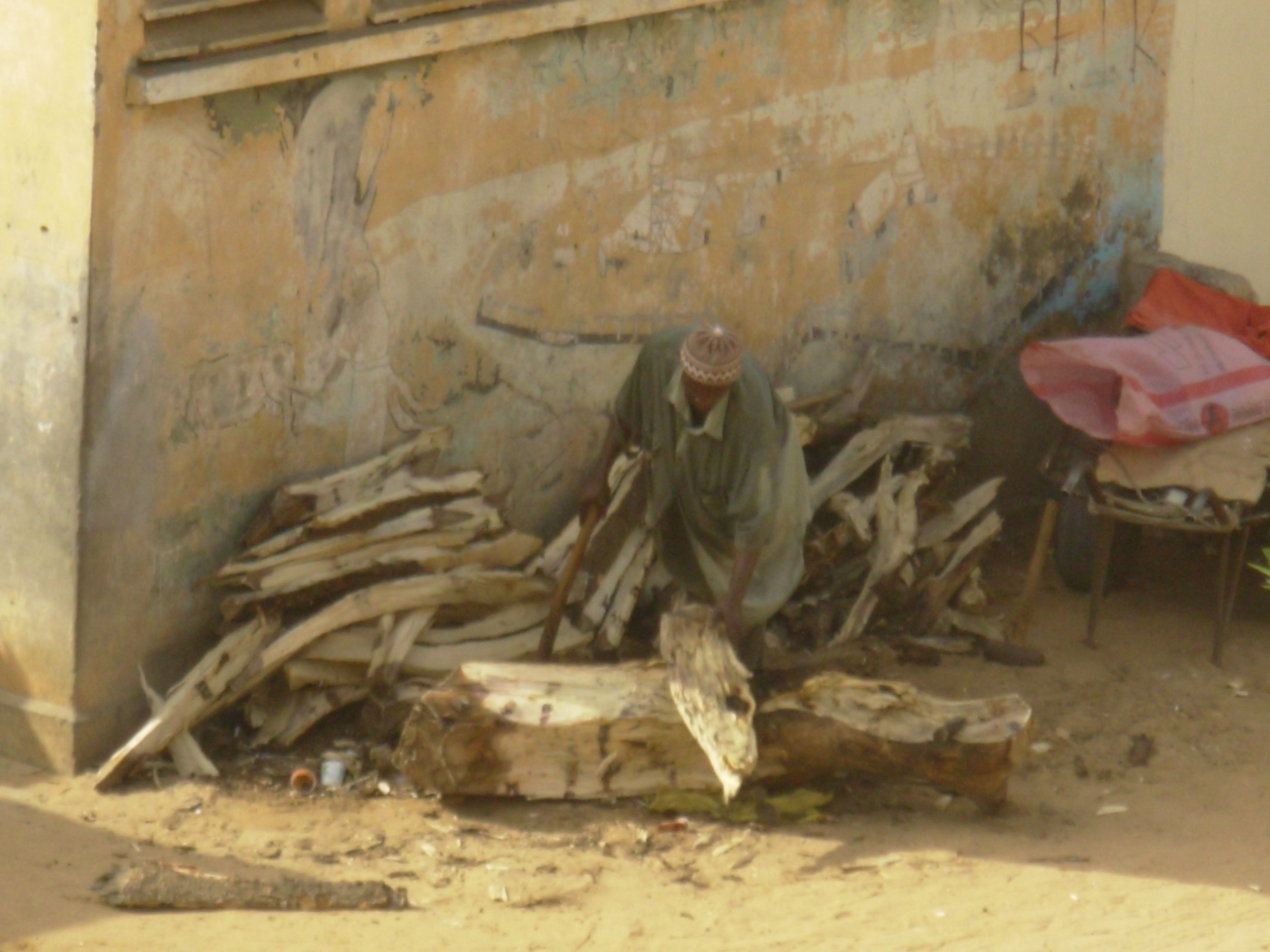
I couldn’t place the mysterious noise I was hearing, so I staggered out onto my balcony in my nightdress, cloudy-eyed and slightly annoyed. It took me a few seconds before my eyes adjusted. There almost camouflaged against the wall was our neighbor was hunched over a pile of dead branches. With powerful chops that threw splinters of wood high up into the air, he was busy chopping wood. With the mystery of the new strange sound then resolved, I realized despite the early hour, my neighborhood was telling me it was past time to get up.
_________________________________________________________
October 6, 2011
A non-exorcism in Yoff
A few days ago I was invited by one of the lifeguards at the Olympic Pool to attend an exorcism in a fishing community here in Dakar. The Ndeup, as it is called, is a traditional animist event practiced by the Lebou people, and is something I’ve been curious about for many years. Until that morning, this lifeguard and I had never actually spoken, but after being introduced by our mutual friend M., who monitors the front desk, it didn’t seem at all abnormal that the lifeguard, in true Senegalese fashion, should casually invite me to this grand occasion organized by his family.
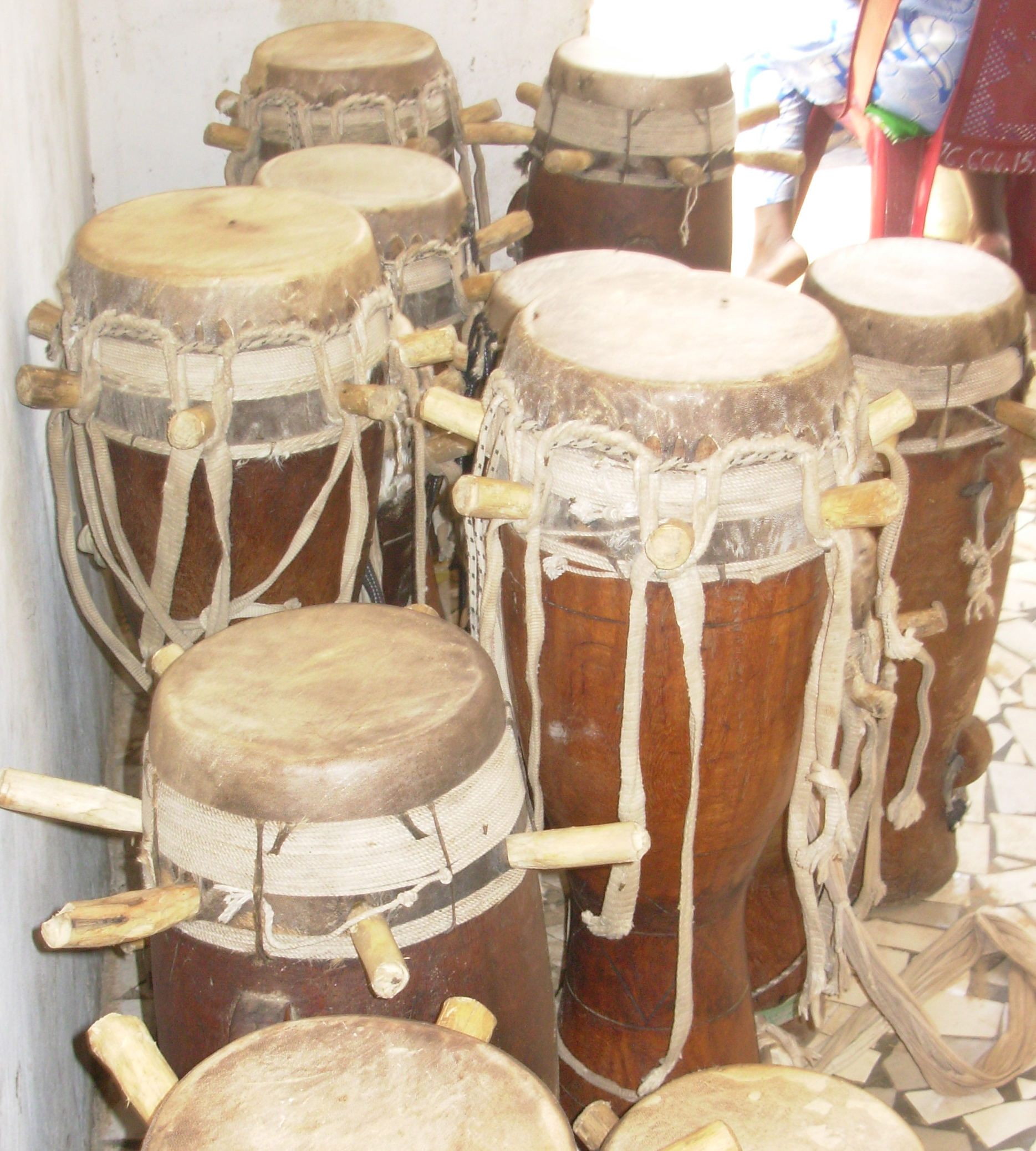
 Ndeup are yearly rituals that can last many days. The ceremony involves a type of dance therapy that rids the body of evil spirits. From the stories I’d heard, people take the innards of animals, lace them around their arms and waste, then twirl and spin to the rhythm of tamtams. It’s a truly animist practice that is slowly fading from Senegalese life and is actually forbidden by Islam. As much as it is scoffed by some Senegalese today who consider it “too ancestral”, I couldn’t find a single local willing to accompany me for fear it “could awaken an unknown spirit.”
In the end, I recruited an English friend to join. When we arrived at the sand-filled courtyard of the mosque, we weren’t greeted by any bellowing chants or gyrating bodies. No signs of animal carnage or transcendental spirits.
Just lunch. Ginormous aluminum cauldrons full of it. Heaping bowls of glistening white rice and fish were starting to circulate like floating conveyor belts on the heads of tiny Lebou girls. We were ushered to stand in the shade of a home-made tarp where we had a clear vantage point to witness lunch for a wide generational mix before us.
Inside the hallway, dividing the two courtyards, was a group of elderly women in faded headscarves. They were sitting deep in the worn out couches, sifting their hands through calabashes filled with soft couscous and millet. Outside were the cooks – large, bosomy women with sturdy hands. They hovered over the steaming pots of boiling vegetables and fish, wiping streams of sweat from their faces and dabbing bits of sauce onto their inner wrist to check the flavour. In the next yard over, were the teenage boys. They lounged casually in the corner wearing low-slung jeans and studded belts, hiding their faces behind over-sized sunglasses and iridescent ball caps. On the plastic chairs next to them were the elderly men in their Kufi hats and long plain-colored boubous. They looked quiet and contemplative, bowls with a few remaining grains for rice lay at their feet. And across the courtyard were the young women and teenage girls. They sat in their colorful dresses on plastic mats and wooden benches. The new mothers breastfed, while the young girls cackled to one another, braiding each others hair.
Standing there I felt a twinge of guilt by this rising sense of impatience that had been festering in me since we arrived. We had come here for something else. We had come to bare witness to something foreign and fascinating, wild and curious. Instead what we had was really just a communal lunch. Just another routine event for these neighbors who, for generations, have lived side-by-side sharing in their daily meals. It suddenly felt odd to be waiting for the drums and dancing, like the quintessential westerners touring through exotic new lands. But in fact it did awaken something in me. It reminded me that it has been far too long since I’ve had a shared meal with locals in this place I currently call my home. It has taken years to withhold my quintessentially Western notions of time and expectation when in Senegal. It is ingrained in me to have specific expectations around events – the time it will start and last, who will be involved, what activities will take place… But on the flip side, I guess that sometimes back home things are so organized that we go through the motions while perhaps forgetting why we are doing them in the first place. While I try to see both sides, it is almost always a test of patience.
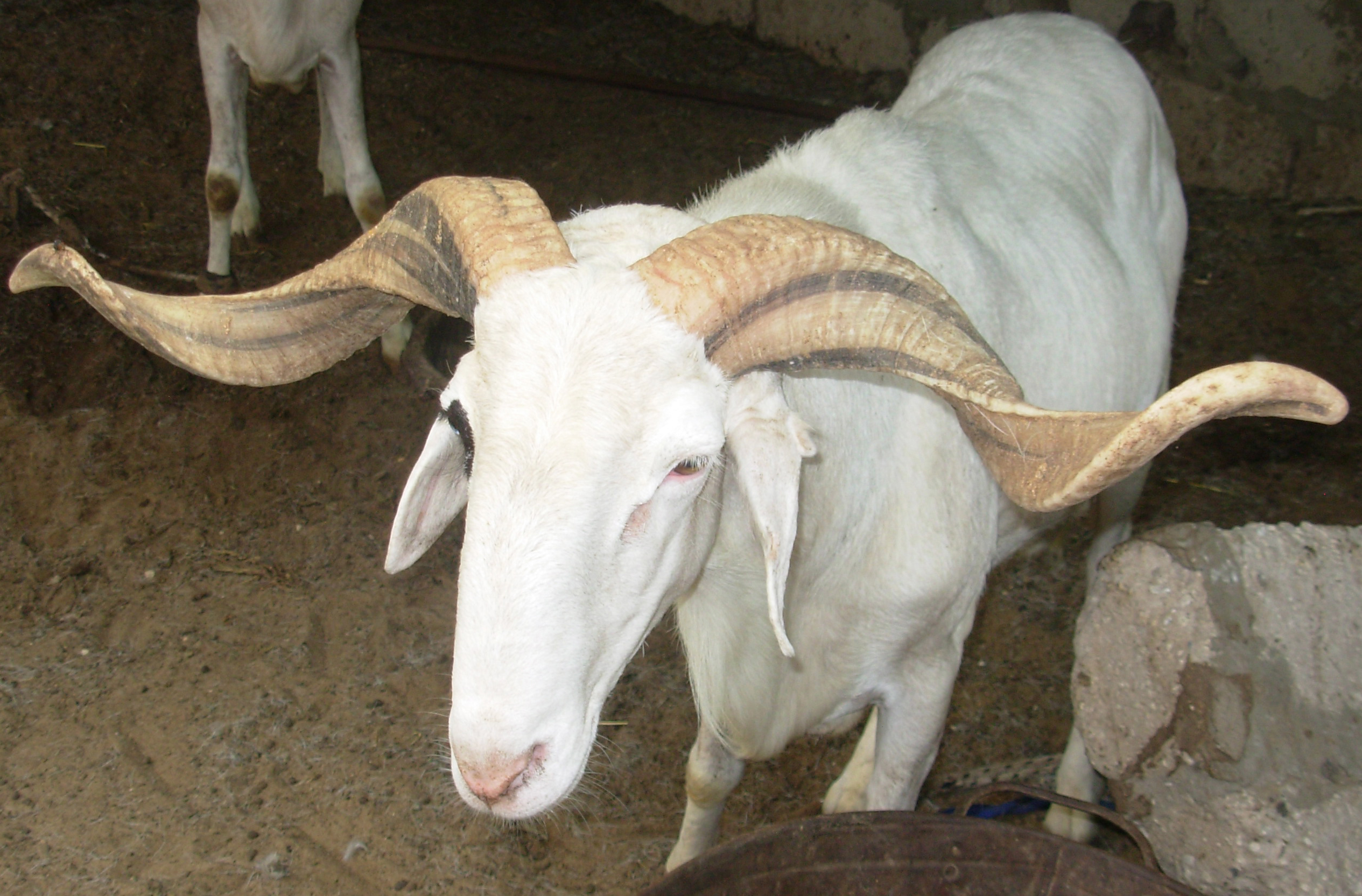
And as for the Ndeup? The only evidence of an upcoming exorcism were the drums in the corner and a couple sleepy-eyed sheep. I’ll try again next year, and this time be sure to have the entire day free.
 AMANDA FORTIER

but i want to know what happened after lunch!
excellent points altogether, you simply received a new reader.
What might you recommend about your publish that you just made some days ago?
Any certain?